Join World's Fastest Growing B2B Network
Join World's Fastest Growing B2B Network



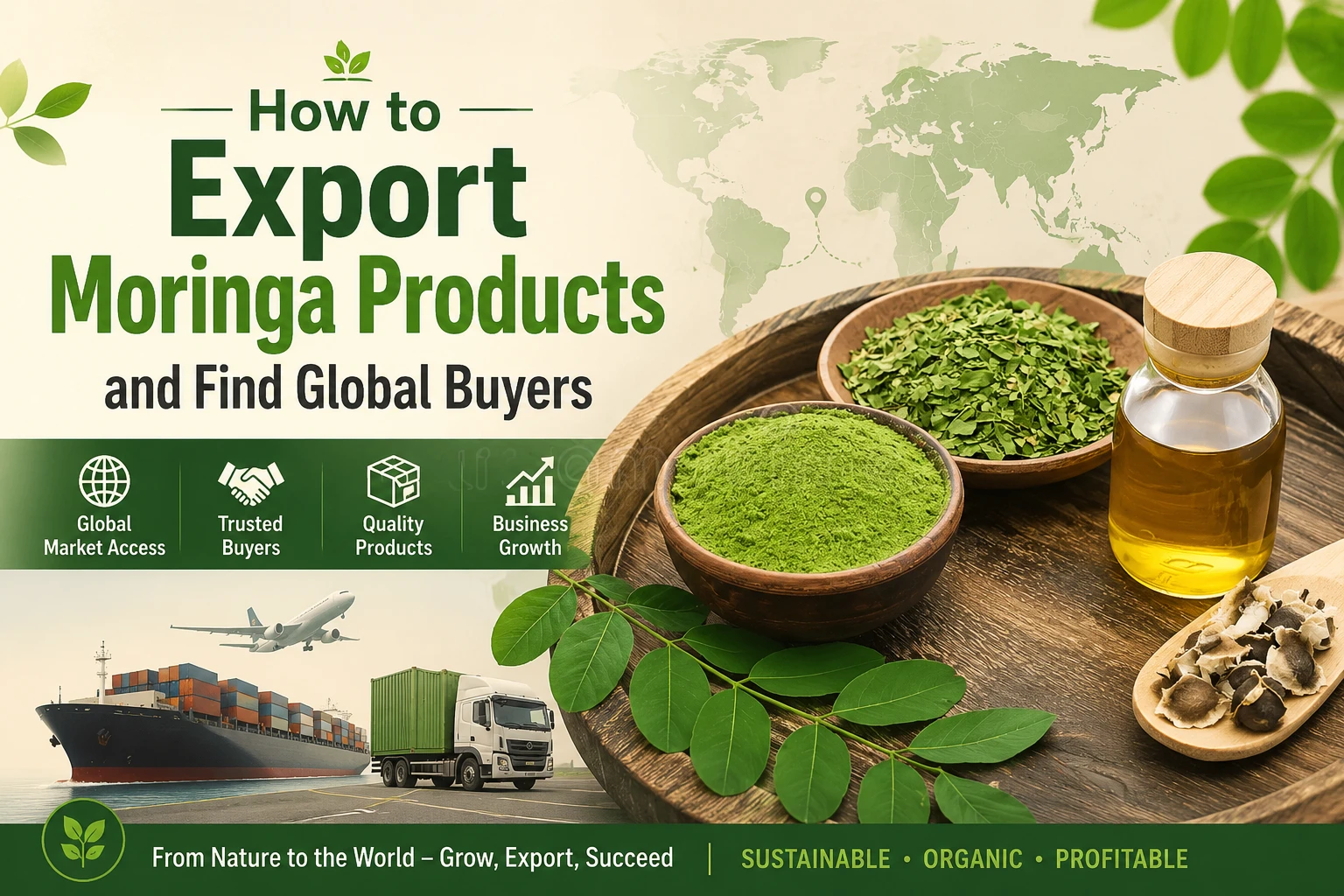
Every year, the international demand for moringa products is growing rapidly. People around the globe are seeking plant-based, organic products that support a healthy lifestyle. Most of the industries are now using moringa in their products, whether it is food brands or cosmetic companies. It is due to this reason that moringa exporters, manufacturers, and suppliers have been provided with some of the best profitable opportunities in the global market environment. With the rising demand, this is the right time to learn how to export moringa powder in the global market.
From this guide, you will be able to get a full understanding of the moringa export business, including the selection of the right moringa products to export and how to prepare for exporting documentation and quality. In addition, you will be guided on how to identify international buyers of moringa, use the correct moringa trading platform, sell moringa products online, and identify moringa buyers online via digital marketing and B2B marketplaces.
The modern consumer base has become more aware of their health, and they are in search of products that are not only organic but also have the ability to supply all vitamins, minerals, and antioxidants naturally. Thus, moringa has become one of the world’s most rapidly growing superfoods due to its benefits for healthy living. The rising trend of herbal supplements and clean-label products has also contributed to the increase in demand for moringa products like powder, capsules, tea, and oil.
The uses of moringa have transcended the health industry alone. Products made from moringa can now be found in the preparation of food and beverages, supplements, cosmetic products, pharmaceutical and nutraceutical products, as well as animal feed. Moringa powder is used in the preparation of drinks, including protein shakes and smoothies, by food manufacturers. Moringa oil is used in the preparation of cosmetic products. Its nutritive composition has made moringa an interesting constituent in pharmaceutical and nutraceutical products.
Here are the simple steps to start international moringa trade in 2026:
Identify countries with strong global moringa market demand first. Analyze the importing patterns, consumer demands, pricing policies of competitors, and regulatory measures in these areas. Consider only those markets where there is an increasing demand for natural products and herbs. Good market research can help moringa suppliers minimize risks and find buyers.
Ensure that you register your company in line with the export regulations of your nation. Ensure that you obtain an export license, tax registration, and any other licenses for agricultural products or foods. These documents are essential to build confidence among customers and for better organic moringa exports.
International buyers usually demand a quality certification before ordering from the company. It is essential that you get the right certification according to your market choice, which includes certifications such as Organic, HACCP, GMP, ISO certification, and FDA registration.
The export documentation for moringa ensures that there will be no problem in the process of exporting the products. Some important documents include Commercial Invoice, Packing List, Bill of Lading, Certificate of Origin, and Phytosanitary Certificate.
The right packaging is necessary for ensuring the safe transportation of the bulk moringa products internationally. Moisture-proof food-grade packaging will ensure a better shelf life of the product. Labeling on the products should have details about ingredients, nutritional value, batch number, certifications, manufacture date, expiry date, and the country of origin.
Choose air or sea freight based on how big your shipment is and how quickly you need it delivered. Learn about Incoterms so you know what the buyer and seller are each responsible for. Seek assistance from experienced freight forwarders.
To find global moringa buyers, you can use a B2B trading marketplace like Tradewheel.com to export moringa powder. The platform has a wide directory of moringa wholesale buyers from around the world. Sign up for free, prepare your profile, add your catalog or certificates, and respond to queries quickly. Frequent updates increase visibility and bring you more chances of getting legitimate orders. Join now and start exporting moringa to global buyers!
Trade shows are considered to be one of the best methods to search for wholesalers, importers, distributors, and retailers. Prior to attending trade shows, you need to make sure that your brochures, product samples, and business cards are ready. Personal communication leads to building trust more quickly and signing supply contracts.
A professional website serves as a virtual shop window for your business. It will have information about your business, products, certifications, export ability, and contact details. Inquiry forms and customer testimonials are very important to add credibility, and a good website design assists buyers in verifying your business before making orders.
The product listing should include pictures of the product, a description of the product, certificates, minimum order quantity, lead time, packaging, and transportation services. Ensure that you use suitable keywords so that people searching online will be able to find your products and contact your business.
LinkedIn is one of the best platforms that can help you network within the industry. You will get an opportunity to connect with importers, wholesalers, procurement managers, and distributors in various parts of the world. Update them about any news in the industry, product launches, successful exports, and certificates.
Create a list of importers and distributors active in your markets. Write an introductory email regarding your business and products. Also, include details about the certifications and experience in exporting.
Moringa powder continues to be the top-selling product owing to its ease of transportation, long shelf life, and use in food and supplement production. The typical export margin for this product is 25%-40% in 2026.
Moringa leaves are popularly sought after for the production of tea and other herbal supplements, hence their popularity in the export market. Moringa leaf powder export requires no extensive processing and is relatively cheap. Margins are 20%-35%.
The popularity of moringa tea as a wellness product continues to rise in Europe and North America. Well-packaged products are worth more and have average margins ranging from 25% to 40%.
Moringa seeds are exported for cultivation, oil extraction, and water purification. They are becoming increasingly popular in agriculture and industry and have average profit margins ranging from 30% to 45%.
Cold-pressed moringa oil is of high value to cosmetic and skincare firms due to its premium quality. As a high-value product, exporters are able to get 35% to 50% margins from it.
Nutraceutical firms buy moringa capsules and tablets in large quantities and use the products as private brands. Value addition makes these products expensive and profitable with good margins.
Private labeling enables exporters to produce their products under the brands of their buyers. The OEM service helps build customer loyalty and is expected to deliver strong profits, with margins between 40% and 60% by 2026.
|
Country |
Popular Products |
Market Demand |
|
United States |
Powder, Capsules, Tea |
Very High |
|
Germany |
Organic Powder, Tea |
High |
|
Canada |
Powder, Supplements |
High |
|
United Kingdom |
Tea, Capsules |
High |
|
Australia |
Organic Powder, Oil |
High |
|
Japan |
Powder, Nutraceuticals |
Growing |
|
South Korea |
Cosmetics, Oil |
Growing |
|
United Arab Emirates |
Powder, Seeds |
High |
Exporters should be prepared for these common challenges:
Preparation and compliance will help the exporter to overcome the challenges mentioned above.
Exporting moringa products is one of the best ways to get higher ROI due to the rising demand across the world for natural, organic, and plant-based products. These can be accomplished through market research, registration of the exporting company, acquisition of necessary certificates, documentation for exportation, and provision of quality products. Appropriate packing and transportation procedures are equally important in developing relations with potential customers. Use B2B sites, increase visibility online, attend foreign trade fairs, and make contacts with buyers and distributors in order to be successful in moringa exporting business.
Serving millions of Buyers & Sellers around the world
Join Free
One moment please
 Browse Through Millions of High-Quality Products.