Join World's Fastest Growing B2B Network
Join World's Fastest Growing B2B Network



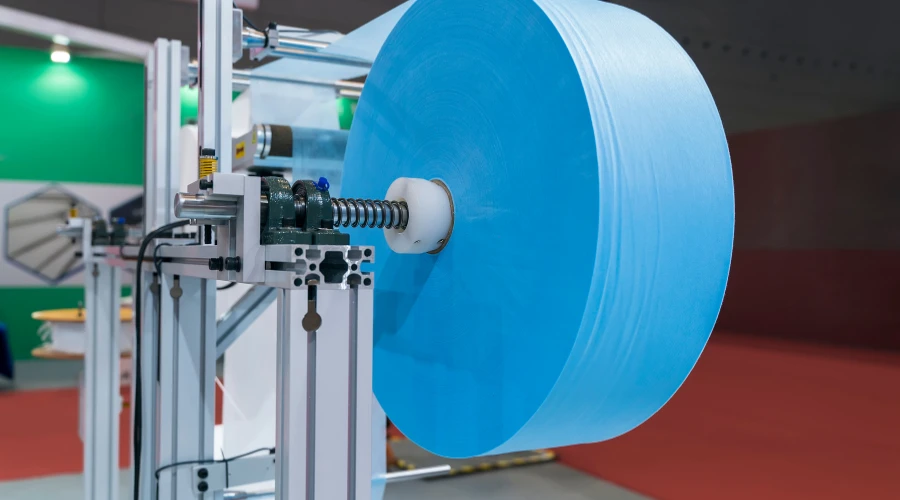
Global demand for hygiene, medical, packaging, and industrial textile products has created strong demand for non-woven fabric machinery. As manufacturers expand production capacity, suppliers and exporters have an opportunity to serve buyers looking for reliable machinery worldwide.
According to recent reports, the nonwoven fabric market is currently valued at around $60.4 billion worldwide. It is mostly influenced by the Asia-Pacific leadership, evolving technology, and the demand for hygienic products.
It's a great time to start a nonwoven fabric machine business, whether you are a manufacturer, supplier, distributor, exporter, or trading company. However, selling nonwoven machines to international clients is not that easy. You need a clear strategy and step-by-step approach to reach the maximum profit.
This blog will serve as a guide for you on how to build your nonwoven fabric machinery business successfully and scale it to international levels.
A non-woven fabric machine business mainly involves selling or supplying machines that make non-woven materials. These machines use processes like spunbond, meltblown, needle punching, spunlace, or thermal bonding for production.
The kind of machine you sell depends on what type of fabric your customer wants to produce. For example, a company making masks needs a meltblown production line, while a company making carpets needs needle-punching equipment.
You can enter this market in many different ways. You can manufacture the non-woven fabric machines under your own brand, source them directly from factories for resale, become an authorized distributor, or operate as an exporter and connect with buyers for international trade.
The first step is to find out what buyers actually need. Do not be hasty in buying the machines first and waiting for customers. Thoroughly research the types of non-woven machinery and what each machine produces. Learn the production capacity of these machines, the required raw materials, power usage, size, and their automation aspects. Your focus should be on the following questions:
Your business model will affect your budget, profits, and daily work.
All these roles have different requirements and aspects. So make sure you choose your business model and strategize your further plan. Once your business becomes stable, you can add more services.
The machines you are offering should align with the actual needs of your target buyers.
Some of the common categories include:
Some of these machines are more expensive than others. However, your focus should be more on the total value of that machine rather than the price, such as ensuring its reliable production capacity, compatibility with raw materials, energy usage, automation level, and its expected service life. You can also ask for real production data of the machine from the manufacturers and showcase it in your product listings. This will give buyers more confidence and help them understand what you are selling.
|
Production Technology |
Primary Applications |
Fabric Weight Range (GSM) |
Typical Line Speed |
Key Compliance & Hardware Specs |
|
Spunbond (S/SS/SSS) |
Shopping bags, agritech covers, medical drapes |
10 – 150 g/m² |
150 – 400 m/min |
Siemens PLC, Automatic tension control, CE marked |
|
Meltblown (M/SMS) |
Surgical masks, N95/N99 air filters, oil sorbents |
15 – 80 g/m² |
20 – 100 m/min |
BFE $\ge$ 99% capability, Die-head temperature accuracy $\pm1^\circ\text{C}$ |
|
Spunlace (Hydroentangled) |
Disinfectant wipes, cosmetic pads, medical gauze |
30 – 120 g/m² |
50 – 200 m/min |
High-pressure filtration system, Stainless steel (SS304/316) |
|
Needle-Punching |
Road geotextiles, carpet backing, industrial felts |
100 – 1000+ g/m² |
5 – 30 m/min |
Heavy-duty needle boards, High stroke-frequency drive |
Although international sales can help you grow your non-woven fabric machine business, in the initial stages, you should start by identifying the types of buyers and countries that can offer you guaranteed sales. Your potential buyers include:
Each buyer has different needs and purposes. A small factory might look for a compact machine with lower production capacity, while a large manufacturer would require a proper, fully automated production machine. Once you know who your target customers are, you can create marketing messages that match their needs. This approach will help you reach more relevant buyers, use your marketing budget wisely, and improve your chances of making successful sales.
Finding serious buyers is one of the biggest challenges that many suppliers face. Fortunately, online B2B marketplaces have made things easier for you, where you don’t have to physically search for buyers. Instead, you can register your business here and let the buyers contact you themselves.
Tradewheel is one of the best B2B marketplaces that offers a reliable trading experience to suppliers. Through this platform, you can get connected with serious non-woven machinery buyers from all over the world. There is a dedicated buyer page as well where global buyers post their requests, along with required MOQs. You can browse through these requests and select the ones that suit your business capacity the most.
Start by creating a complete supplier profile and add your company name, business type, location, years of experience, main products, and export markets. A complete profile can help buyers understand who they are dealing with before they send an inquiry.
When buyers search for non-woven fabric machinery online, they want useful information. A product page with a low-quality machine photo and a simple product name will not attract them much.
You should create a detailed product listing that actually explains what the machine does and who should buy it.
You can also include useful information in the product descriptions, such as the machine type, production capacity, fabric width, raw materials, power requirements, automation level, dimensions, weight, output speed, and main applications.
Your page should answer the common buyer questions:
This type of content helps in improving both the user experience and search visibility of your business.
Industrial machinery is a major purchase for most buyers, so showing a single ad or post will not get buyers to trust you so easily. They require proof that your business is reliable and worth it. You can show your factory or supplier facilities to the buyers using photos and videos.
Many buyers also ask for instructional videos like machine testing, installation, usage, etc. You can include customer feedback, quality photos, and case studies in the product listing. Make sure to explain your warranty and service terms clearly.
This way, the buyers who are hesitant to contact you would become familiar with your product and build confidence in your services. If you are exporting machines, make sure to explain how you handle packaging, shipping, customs documents, installation, and spare parts.
If you want to export non-woven fabric machines, you need to create a simple and reliable export process.
First, confirm the buyer’s intentions about what type of machine they are looking for and what services they are expecting. Then prepare a quotation accordingly and agree on technical specifications. After you have received the order, you can confirm the production timelines and arrange machine testing before shipping it to the buyer.
The packaging of industrial machines is usually different than regular packaging. You may need strong wooden crates, moisture protection, shock protection, and proper labeling in the packaging to ensure its safe shipment.
You should also prepare the required export documents. These can include invoices, packing lists, shipping documents, certificates, and other documents required by the destination country.
Selling the non-woven fabric machine is only the first part of the business. Many buyers are new to this and need help with installations, testing, and other maintenance work. If you offer these after-sales services to them, you can create a stronger value for your business than the suppliers who only offer the equipment.
You can also provide clear installation instructions and operator training to the businesses. If it is inconvenient for visits, you can instead offer support through video calls or online communication.
Keep the spare parts available or maintain a reliable supply system. This way, the buyer would keep their entire production line running even if a small part is unavailable.
This is where most sellers lose their motivation. After you have listed your products, the challenge comes in growing your business enough to get a good stream of sales. There are some steps you need to take to get your business to a higher level.
Your long-term goal should be to become a complete solution provider rather than just another machine seller.
It can be profitable when you choose the market and manage costs carefully. Your results will depend on machine quality, supplier pricing, shipping costs, import rules, competition, and after-sales service.
Healthcare, hygiene products, agriculture, construction, automotive, filtration, packaging, furniture, and industrial textile companies may use non-woven fabric production equipment.
Start by choosing your business model and researching the market. Then identify your target buyers, find reliable manufacturers, select the right machinery, and build a stable sales and export business.
The best approach to start a non-woven fabric machine business is to start with a focused market and select the right manufacturers. You need to learn what your buyers need, solve their production problems, and build trust through good service. This way, you can build a stable business and expand to international markets.
Serving millions of Buyers & Sellers around the world
Join Free 15-Dec-2023
The apparel and textile industry has always been growing, but it has skyrocketed in the past few years. With its enormous growth, the number of brands and textile machinery manufacturers are also increasing over time. Therefore, it has become crucial

One moment please

 Browse Through Millions of High-Quality Products.