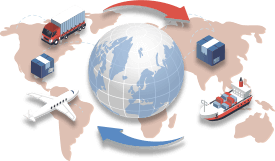
Join World's Fastest Growing B2B Network
Join World's Fastest Growing B2B Network




Sugar is one of the world's most widely traded agricultural commodities — a foundational input for the food, beverage, pharmaceutical, and industrial sectors. As global populations grow and middle-class disposable income rises, so does demand for convenience foods and sugar-intensive products.
For B2B buyers, identifying trustworthy sugar suppliers is a critical strategic decision — one that directly affects product quality, supply chain continuity, and profitability. This guide covers everything you need: supplier roles, import regulations, market trends, pricing benchmarks, and a curated list of leading suppliers accessible through Tradewheel.
Sugar suppliers bridge the gap between agricultural producers and end-use buyers. They manage processing, storage, and distribution — acting as the operational backbone of the sugar supply chain, connecting refineries with distributors, retailers, and industrial manufacturers.
Raw sugar enters refineries where it is filtered, melted, and recrystallized into finished product. Suppliers oversee this process and manage inventory through to final delivery. The key actors in the chain — manufacturers, exporters, wholesalers, and distributors — each occupy a distinct role across production, storage, logistics, and international trade.
Food & beverage manufacturers, bakeries, and pharmaceutical companies are among the largest bulk sugar buyers globally. These sectors demand strict quality consistency and reliable supply volumes — making supplier vetting a non-negotiable step.
Regardless of destination market, every cross-border sugar transaction requires a core set of trade documents. Missing or incomplete paperwork is one of the leading causes of customs delays and shipment rejections.
Formal record of the transaction between buyer and seller, including price, quantity, and product description.
Shipping contract and receipt of goods, serving as the primary freight document for ocean or air cargo.
Itemized breakdown of shipment contents, weights, and dimensions for customs and logistics handling.
Certifies the country where sugar was produced — critical for tariff rate determinations and trade agreements.
Government-issued authorization required in many markets before sugar can legally enter the country.
Confirms the product is free from pests and diseases, as required by agricultural import authorities.
Cargo insurance documentation protecting both buyer and seller against transit-related loss or damage.
Formal filing submitted to customs authorities at the port of entry for tariff assessment and clearance.
Every major import market applies its own regulatory framework. Here's what B2B buyers need to know.
US sugar imports are managed under a Tariff Rate Quota (TRQ) system administered by the US Trade Representative, covering 40 countries. Within quota, low preferential tariffs apply — approximately $0.0066/lb for raw sugar and $0.0166/lb for refined sugar. A minimum domestic price support mechanism also applies. Importers must track annual quota allocations carefully to maintain cost efficiency.
The UAE requires imported sugar to meet ICUMSA quality standards. As of 2026, compliance includes strict quality specifications and labeling for food safety. Raw sugar may qualify for reduced or zero-duty treatment under specific product classifications within the Unified Customs Tariff. Clear, accurate product classification is essential to secure favorable duty treatment.
Saudi imports must comply with SFDA (Saudi Food & Drug Authority) regulations governing product quality and labeling. All labels must include Arabic translations. Packaging must be food-grade and align with GSO (Gulf Standardization Organization) standards. Non-compliance can result in shipment rejection at customs.
The EU applies some of the world's steepest sugar import tariffs on non-preferential trading partners: approximately €339/tonne for raw sugar and €419/tonne for white sugar. The EU is expanding duty-free schemes in 2026 for select partner nations. Buyers sourcing for European distribution must account for these tariffs when modeling landed costs and margins.
Don't evaluate suppliers on price alone. A lower quote from an uncertified supplier can cost far more in rework, regulatory penalties, or lost contracts down the line.
Verify sugar grades, purity standards, and certifications — look for ISO, HACCP, and SGS.
Ensure the supplier can scale to meet large or seasonal order volumes without disruption.
Prioritize suppliers with a proven track record in international trade compliance and logistics.
Compare wholesale rates across multiple suppliers to benchmark fair market pricing before committing.
Verified suppliers available for bulk purchasing on Tradewheel's global B2B marketplace.
Supplies sugar products to international buyers with a focus on bulk purchasing stability. Serves food manufacturers, retailers, and commercial distributors, with access through Tradewheel for competitive pricing and a broad product inventory.
Serves food processing companies and commercial buyers worldwide with an emphasis on consistent product quality and bulk order reliability. Their export background supports businesses competing in global sugar markets.
Supports food, beverage, and retail buyers with flexible bulk sugar solutions and dependable international supply chains. Flexible sourcing options reduce procurement friction for commercial businesses of all sizes.
Works with wholesalers, distributors, and food manufacturers seeking dependable sourcing partners. Offers consistent product availability and smooth export logistics, with competitive pricing across multiple sugar product lines.
Connects global buyers with comprehensive sugar supply solutions for commercial and industrial applications. Broad product selection and international trading support help businesses maintain supply continuity in competitive markets.
Tradewheel connects sugar importers with verified international exporters, offering streamlined communication, bulk purchasing access, and private-label support — for businesses of every size.
Access trusted sugar exporters and refineries offering competitive wholesale rates.
Custom packaging, branding, and OEM manufacturing options for retail and distribution.
Simple, free registration with low minimum order quantities to suit emerging importers.
Four forces reshaping how sugar is grown, packaged, and traded globally.
Growing health consciousness among global consumers is driving demand for less-processed organic sugar from cane, beet, and palm sources. Premium pricing in this segment continues to attract new market entrants.
Major producers are adopting precision farming to improve soil health, biodiversity, and water efficiency while reducing chemical inputs — responding to buyer ESG requirements and regulatory pressure.
Eco-friendly packaging integrated with smart tracking technology is becoming standard for premium bulk exports. This supports better inventory management and traceability across global supply chains.
AI-driven platforms are transforming supplier sourcing from a slow, manual process into a rapid, data-driven function — reducing time-to-supplier and improving match quality for importers globally.
Benchmark pricing for international B2B buyers sourcing in bulk.
Raw sugar accounts for 55–66% of all globally traded sugar, with Brazil as the dominant exporter. Refined white sugar follows at approximately 35% of global trade volume.
| Sugar Type | Primary Uses | Avg. Wholesale Price (2026) |
|---|---|---|
| Refined White Sugar | Food processing, beverages, bakeries, confectionery | $450–$650 / MT |
| Brown Sugar | Baking, desserts, sauces, flavored beverages | $500–$750 / MT |
| Raw Sugar | Industrial refineries, large food manufacturers | $400–$600 / MT |
| Organic Sugar | Health foods, organic products, premium beverages | $700–$1,100 / MT |
| Liquid Sugar | Beverage manufacturers, syrups, large-scale food processing | $600–$900 / MT |
Global sugar prices shift with weather events, production levels, and trade policy changes — requiring hedging strategies and supplier flexibility.
Port congestion, customs clearance backlogs, and freight disruptions can significantly delay delivery timelines and strain buyer-supplier relationships.
Variations in purity, color, moisture, or packaging quality between shipments can create downstream production and compliance problems for buyers.
Country-specific food safety laws, labeling mandates, and documentation requirements demand constant monitoring — especially when entering new import markets.
Direct answers for B2B buyers, importers, and sourcing professionals.
Refined white sugar is the standard choice for commercial food production, valued for its consistent purity, neutral flavor, extended shelf life, and versatility across beverages, bakeries, confectionery, and processed foods.
Reputable exporters should carry ISO, HACCP, SGS, Organic Certification, Halal Certification, and relevant food safety compliance documentation to satisfy international import standards and buyer quality requirements.
Yes. Organic sugar commands a significant premium due to chemical-free cultivation requirements, organic certification costs, specialized processing, and sustainable production practices — all of which increase manufacturing and logistics costs.
Yes. Many global sugar suppliers offer private-label services including custom packaging, logo printing, and OEM manufacturing — making them well-suited for retailers, supermarkets, and branded food businesses.
Brazil leads global sugar exports by a wide margin, followed by India, Thailand, Australia, and Guatemala. Each country's export dominance is driven by large-scale agricultural capacity and established trade infrastructure.
Raw sugar is the most widely traded form, representing 55–66% of global trade volumes. Brazil is the primary origin for raw sugar exports. Refined white sugar accounts for approximately 35% of international trade.
Sugar remains one of the most actively traded commodities in the global economy. For B2B buyers entering or expanding in this market, supplier quality and supply chain reliability are the two variables that most directly determine business outcomes.
Platforms like Tradewheel eliminate the traditional barriers — connecting importers with verified, experienced sugar suppliers without the friction of cold outreach or unreliable directories. Whether you're sourcing refined white sugar for a food manufacturer or organic sugar for a premium retail brand, the right partnership starts with the right platform.
Join thousands of global importers using Tradewheel to connect with trusted sugar suppliers, access competitive wholesale rates, and build lasting trade partnerships.
Serving millions of Buyers & Sellers around the world
Join Free
One moment please



 Browse Through Millions of High-Quality Products.