Join World's Fastest Growing B2B Network
Join World's Fastest Growing B2B Network



The global candy market analysis shows rapid growth, as demand for various types of candy continues to increase. Based on customers' requirements and needs, multiple candies are being introduced to the market. From chocolates to gummies and functional candies, all are now available worldwide.
The candy distribution business is at its peak right now, as branded companies need intermediaries to supply their products to retailers and end consumers. Candy distribution is all about executing strategies at the right time and place to make the business work.
This blog covers various aspects, including how the candy industry operates and how new trends and market analysis are shaping it. Candy import and export regulations are as important as anything else in the distribution business. So let's get started.
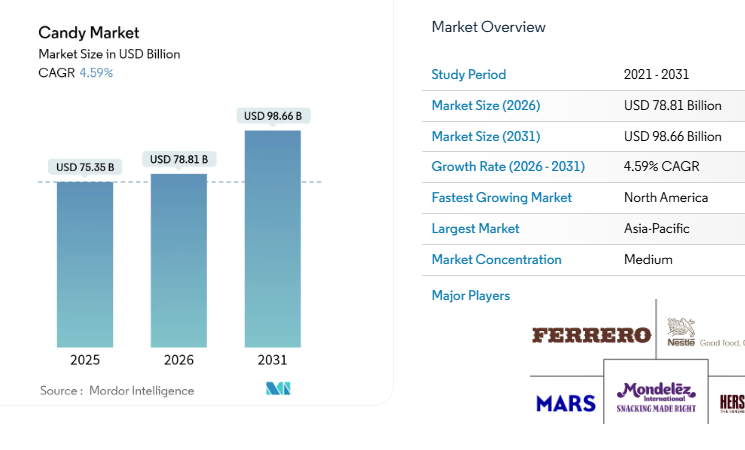
According to Mordor Intelligence, the global candy market is projected to reach $78.81 billion by the end of 2026. By 2031, it is expected to become a $98.66 billion industry with a CAGR of 4.59%. The industries are thriving in the international market when it comes to generating sales through online channels.
Non-chocolate candies are high in demand. These candy options are best to restock inventory for distribution purposes because of their highest selling value.
Candy demand varies by region worldwide. In North America, chocolate and premium candies are very popular. In Europe, organic and high-quality sweets are in demand. In the Asia-Pacific region, the market is growing quickly because more people have disposable income. In the Middle East, candy sales increase during festivals like Ramadan and Eid.
Each region has different tastes and buying habits. Understanding these differences helps distributors sell the right products in the right place. Regional knowledge is key to growing a successful global candy business.
Candy distribution can be profitable if managed well. Chocolate products usually give a 20 to 30 percent profit margin. Gummies and jellies can earn 25-40%. Hard candies and lollipops may achieve margins of 30 to 50 percent.
Functional candies, like energy- or vitamin-infused options, can deliver up to 55 percent. Selling seasonal or limited-edition candies often increases profits. Understanding which products sell best in your market helps you maximize earnings. Smart pricing and bulk deals with retailers can improve profitability. Profit depends on buying costs, the selling price, and efficient inventory management.
Here is the list of the latest candy market trends in 2026 that you do not want to miss out on, as they are playing a crucial role in shaping the industry. The candy market is no longer restricted to sugary treats; it is evolving and catering to a broader range of customer preferences. Candies now cater to specific age groups but have also expanded their reach to a wider audience.
1) Now, along with sugary treats, candy manufacturers are also focusing on health-conscious consumers and producing functional candies, such as low-sugar sweets or vitamin-infused candies, so that no one can be left behind when it comes to enjoying these snacks.
2) As the world moves towards adopting eco-friendly practices in real life, candy companies are also focusing on providing sustainable and eco-friendly packaging for their candies to attract environmentally conscious customers.
3) Millennials and Gen Z are increasingly interested in purchasing nostalgic and retro-themed candies, prompting manufacturers to revive such products in the market due to high demand.
4) Top gummy candy wholesalers and distributors in the USA, Europe, or other countries in 2026 can make their business profitable by selling seasonal and limited edition candies to buyers, as there is a huge market now.
5) Because of health consciousness, people are now purchasing vegan, gluten-free, and organic candies. As a distributor and wholesaler, you can also explore this market.
Under the candy market analysis, understanding evolving buyer behavior, consumption patterns, and trends is crucial for success in the industry.
1) Buyers purchase candy not only to celebrate special occasions and events but also as a snack on the go, as well as for indulgence purchases. It helps you, as a distributor or wholesaler, to retain customers. If you offer them quality products, they will definitely connect with you for long-term business dealings.
2) Candies are no longer restricted to value packs. People now purchase candies to give to their loved ones. Subscription kits and influencer promotions are also driving customers' interest in buying candies from different brands and countries.
3) Millennials and Gen Z are into trying and experiencing new and bold candies, such as chill mango flavours and wasabi chocolate. Many millennials are interested in purchasing candies that offer health benefits, such as vitamin-infused flavored candies and probiotic chocolates.
4) Pop Rocks, Ring Pops, and Push Pops are among the most popular candies among Gen Z and millennials, and these candies are experiencing a comeback due to high demand.
5) Buyers are drawn to fun and aesthetically pleasing candy packaging that grabs their attention with unique details, specific serving portions, and recyclable packaging that doesn't harm the environment. Ingredients and brand transparency are in high demand, revealing what companies offer to buyers and what ingredients they use.
6) With a surge in digitalization and online shopping, buyers are increasingly seeking to source products in bulk and through online platforms. This allows them to purchase products without going to the mall or shops, as they can order online and receive their parcel without leaving home.
The candy market is led by several big global brands. Some of the best-selling candies in the world are Mars, Snickers, and M&M’s. Hershey’s is known for Hershey bars and Kisses. Ferrero makes Ferrero Rocher and Kinder chocolates.
Nestlé sells a wide range of chocolate and confectionery products. Haribo dominates the gummy candy segment. Perfetti Van Melle offers popular chewing gum and candy products. These brands lead the market and shape consumer preferences globally. Mentioned below are some categories and their best-selling products globally
1) Chocolate is always in trend when it comes to the candy industry. People love to purchase various kinds of chocolates, from dark to milk, which are popular globally. Dark chocolates and milk chocolates are the most popular types of chocolate worldwide. Nowadays, Kunaffa-filled chocolates are gaining popularity.
2) Gummies and jellies are in high demand among both younger audiences and older people. The best part is that the candy industry has introduced plant-based gummies and jellies for customers seeking vegan options. Different shapes of gummies and jellies are available in the market, including gummy bears and worms, in a variety of flavors that range from sour to sweet.
3) Hard candies and lollipops have another huge market. Lollipops are mostly sold on specific occasions, such as Christmas and Halloween, but people also buy them for kids. Adults can also consume these hard candies and lollipops. They come in different flavors, sizes, and prices.
4) Chewing gums, mints, and functional candies are also another market of candies that athletes and people of all ages love to consume. Probiotic, energy-infused, and mood-boosting candies are among the most popular options on the market today.
Awareness of the latest import and export regulations for candies will help you carry out a smooth export or import to the specific regions without any issues.
|
Aspect |
Details |
|
Tariffs, Duties & Documentation |
Candy is generally categorized under HS Code 1704, which affects import tax rates by country, Required documentation includes Certificate of Origin, Commercial Invoice, Packing List, and Bill of Lading Some countries have sugar content regulations or impose additional health-related duties on candy products. |
|
Labeling & Food Safety Compliance |
In the USA, the FDA mandates labeling for ingredients, allergens, nutrition facts, and importer contact info, The EU requires multi-language labels, strict food additive rules, and full nutritional transparency, In the Middle East, Arabic labeling and Halal certification are often required, especially for giftable sweets. |
|
Key Importing Countries & Seasonal Spikes |
Top importing countries in 2026 include the USA, UK, Germany, Japan, and UAE, each with unique demand trends, Peak import seasons include Valentine’s Day, Ramadan, Halloween, Christmas, and Lunar New Year. Wholesalers should align inventory and logistics planning with global holiday calendars for optimized sales. |
Tradewheel.com is the fastest-growing online B2B trading platform, connecting you with reliable buyers both locally and internationally. The platform is easy to use and equipped with all the right tools, making trading effortless for both sides of the business.
As a distributor, you can explore the buyers' directory and connect with the buyer who best suits your business. Offer them bulk deals and discounts under their desired budget. Creating a seller's account is free here, making the platform ideal for startups and small businesses to get started without any investment in account creation.
Starting a candy distribution business is simple if you follow the steps. First, research your market and find which candies are in demand. Choose the product category you want to sell. Get the necessary import and export licenses for your region.
Partner with manufacturers or suppliers to secure reliable stock. Use B2B platforms to connect with buyers who want to purchase in bulk. Build retail and online distribution channels to reach more customers. Offer quality products and maintain good relationships with buyers. Proper planning and consistency are key to growing a successful candy business.
In this blog, we have provided you with the market analysis of the candy business along with the latest trends, consumer behaviour, best-selling products and categories, opportunities this industry brings for distributors, and distribution strategies you need to follow, along with laws and regulations required to run a candy distribution business in international countries as well. We hope this blog addresses all your queries as effectively as possible.
Serving millions of Buyers & Sellers around the world
Join Free 21-Jan-2026
Introduction In 2026, we believe that candy is not just for kids. These sweet confections are loved by people of every age all over the world, making it one of the biggest industries that thrives in the peak of summer, winter, and more especially in
02-Jul-2025
Halloween is one of the biggest traditions in the world, especially in the US, which is also considered the beginning of festivities as well as the start of the holiday season. It is a peak candy season, and people are interested in purchasing candie
16-May-2025
Candies are one of the most consumed sweets in the world. From sweet chewy gummies to smooth chocolate bars, there is a huge demand for every type of candy. The gourmet, nostalgic, and custom candy market is growing rapidly in 2025. Whether it's for

One moment please

 Browse Through Millions of High-Quality Products.