Join World's Fastest Growing B2B Network
Join World's Fastest Growing B2B Network



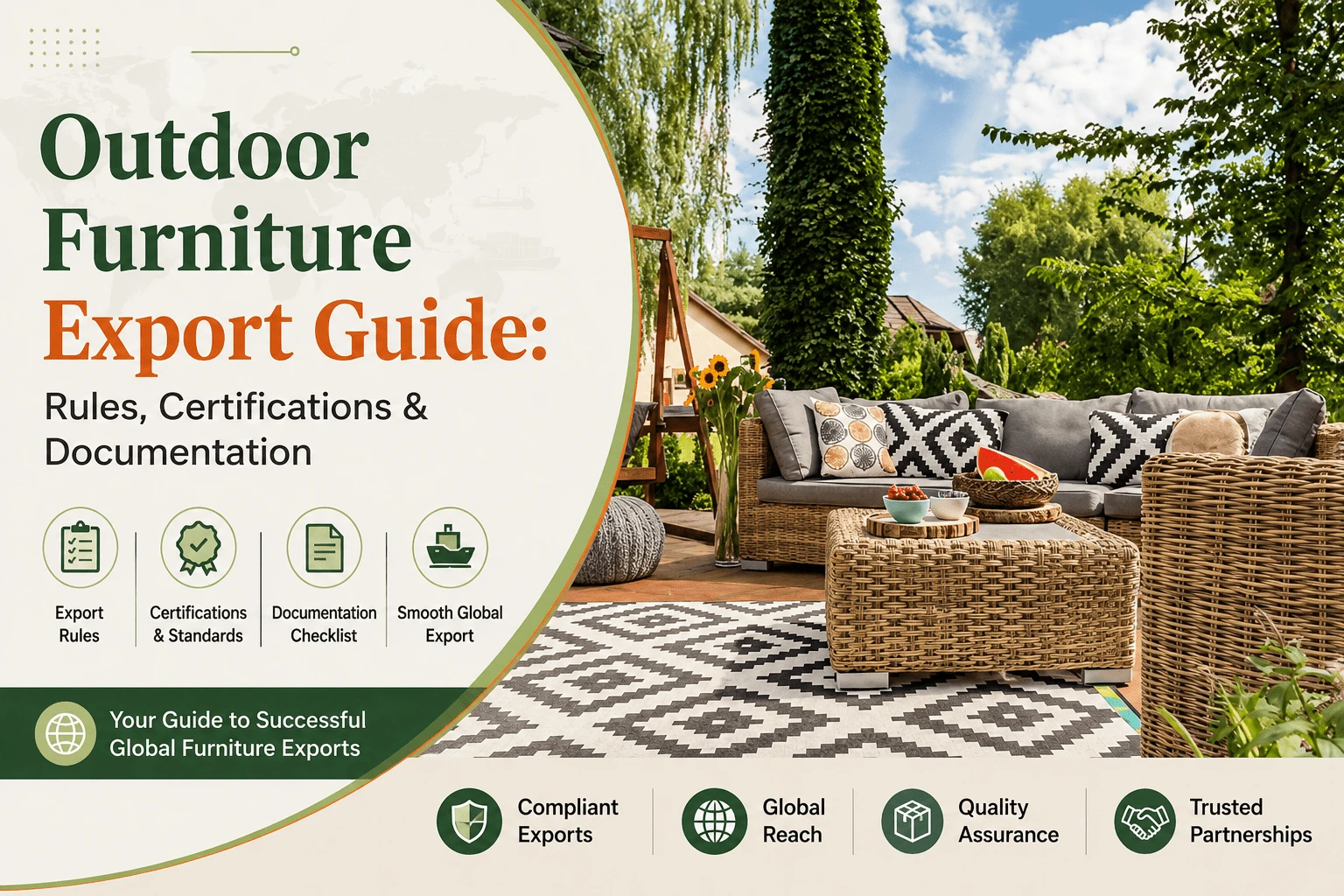
The demand for outdoor furniture is growing worldwide. Patios, balconies, hotels, restaurants, and other commercial venues are also increasing their use of outdoor furniture. According to a report by Stellar Market Research, the outdoor furniture market is estimated to reach USD 90.99 billion by 2034 with a CAGR of 5.5 %.
Therefore, there are great opportunities available to outdoor furniture manufacturers and exporters willing to reach the global market. But simply manufacturing good products is not enough. A correct guide on how to export outdoor furniture is necessary along with understanding the outdoor furniture export rules.
If you are a beginner in exporting outdoor furniture or expanding into new markets, outdoor furniture certifications and outdoor furniture export documentation will be essential tools to avoid unnecessary losses in terms of delays in shipments, customs issues, and other problems that can arise due to ignorance of export process requirements. Each country has its own regulations on imports, product safety, and documentation. This outdoor furniture export guide provides useful information about necessary certifications, export documentation, and packaging when exporting outdoor furniture.
The procedure of furniture export compliance is not merely about filling in documents; it assists in making your deliveries smoother, protecting your company, and establishing good relationships with international clients.
Provide all necessary documents in advance. Verify that commercial invoices and packing lists are accurate. Apply proper HS codes and product descriptions. Make sure that declarations correspond to shipment details. Fill out documents in order to get through customs faster.
Buyers tend to prefer exporters who adhere to international regulations. Compliance demonstrates your professionalism. Certified products have better opportunities for selling. Regulatory compliance is positive for your company's image among distributors and retailers. Many big buyers deal only with compliant manufacturers.
Prevent customs violations and additional fees. Minimize risks of your shipments being rejected. Avoid costs related to storing your goods. Decrease risks of product recalls.
Knowing about international rules prior to shipment prevents delays and additional expenses.
United States
Comply with product safety rules. Provide proper labeling and documentation. Meet customs and import rules.
European Union
Comply with REACH chemical rules. Meet packaging and environmental requirements. CE marking can be required for items containing electrical components.
United Kingdom
Comply with UK product safety rules and appropriate labeling and customs documentation after Brexit.
Australia
Severe biosecurity inspection. Wooden packaging needs to comply with quarantine rules. Products should meet local safety requirements.
Middle East
Varies from country to country. Some markets may require product testing and certification. Check destination-specific labeling rules before shipment.
The right certifications improve buyers' trust and make you more likely to reach the international market.
Guarantees that wood is from sustainably managed forests. Encourages sustainable wood supply. It is popular among many retailers and commercial buyers. Strengthens your environmental profile.
Needed only for products regulated by EU directives. Popular for outdoor furniture that is electrical/mechanical. Indicates compliance with EU safety requirements. Makes it possible for products to enter the European market.
ISO 9001
Signifies a good quality management system. Increases consistency of the production process and buyer confidence.
ISO 14001
Shows commitment to environmental management. Helps reduce the environmental footprint. Promotes sustainable manufacturing.
BSCI or Social Compliance Certificates
Shows that the manufacturing is ethical and that labor conditions. It helps with passing the supplier audit. Requested by big retailers.
REACH Compliance: Ensures that no restricted chemicals are used. Important for exports to Europe.
RoHS (If Applicable): It is needed for products that have electrical parts. Limits use of hazardous materials.
Fire Safety Certificates: May be required by some commercial buyers and hospitality projects. Shows compliance with fire performance requirements.
Weather Resistance Test: Shows that products can resist outdoor weather. Tests resistance to UV, moisture, corrosion, and temperature changes. Adds value for international buyers.
|
Certification |
Purpose |
Required Markets |
|
FSC |
Sustainable wood sourcing |
Global, especially EU & North America |
|
CE Marking |
Product safety compliance |
European Union |
|
ISO 9001 |
Quality management |
Global |
|
ISO 14001 |
Environmental management |
Global |
|
BSCI |
Social compliance |
Europe, Global retailers |
|
REACH |
Chemical safety |
European Union |
|
RoHS |
Hazardous substance control |
EU (electrical products) |
|
Fire Safety Certification |
Fire performance |
Commercial projects (varies) |
|
Weather Resistance Testing |
Outdoor durability |
Global buyers |
Proper documentation prevents any delays and helps in ensuring efficient clearance by customs.
Commercial Invoice: Includes information about the buyer and seller. It informs about the products, their quantity, worth, and terms of payment. Used by customs for calculating duties on the products.
Packing List: Contains information about the dimensions and weight of packages. Provides information regarding the items that have been packaged. Helps in verifying the shipment by customs and the buyers.
Bill of Lading/Air Waybill: Acts as proof of the shipment. This is required for the transport of goods. Used for releasing the goods at the destination.
Certificate of Origin: Indicates where the furniture was manufactured. Needed by many importing nations. Can be helpful to buyers for getting tariffs.
Furniture Export License (Where Necessary): Certain products or destinations may require an export license. It helps in verifying your export requirements for the region.
Phytosanitary Certificate (For Wood Products): Required for certain wood products. Indicates that wood is free from any disease-causing pests. Helps in fulfilling quarantine requirements.
Insurance Documents: Provide protection against any loss or damage to the shipment. Adds security to buyers. Used in international transport.
Inspection Certificate (Where Required): Informs about the quality of the product before its shipment. Usually required by buyers or government authorities. Reduces disputes after delivery.
✔ Commercial Invoice
✔ Packing List
✔ Certificate of Origin
✔ Bill of Lading
✔ Export Declaration
✔ Insurance Documents
✔ Inspection Certificate
Good packaging will ensure that your outdoor furniture is protected while it is being shipped internationally. The use of quality export-grade cartons, protective foam, corner guards, waterproof packaging material, and strong pallets will help to ensure that your products are secure during international furniture shipping. In case wooden pallets or crates are used, then they must meet ISPM-15 standards in accordance with the international quarantine requirements.
Labeling is equally important. It is imperative to have your products labeled correctly. Every single package must be labeled with relevant product details, SKU numbers, barcode (if any), handling instructions, carton numbers, weight information, and Country of Origin label.
Here are the most effective ways to easily export outdoor furniture to global buyers:
A global B2B marketplace like Tradewheel.com is one of the easiest and fastest ways to export outdoor furniture. It helps manufacturers connect with genuine outdoor furniture buyers from different countries without spending a large budget on marketing. You can showcase your product catalog, receive inquiries, and build long-term business relationships in one place. It is especially useful for small and medium-sized exporters looking to reach international markets, generate quality leads, and grow their export business more efficiently.
Trade fairs and furniture exhibitions are an excellent forum to make contact with buyers, importers, wholesalers, and distributors personally. It will be a chance for you to show the excellence, design, and durability of your outdoor furniture and create a reliable impression on your buyers. It is also possible to learn about market trends, analyze your competitors, and make useful business contacts. Your success at such exhibitions might bring you lasting export cooperation.
Trade exhibitions and furniture exhibitions are good avenues for connecting directly with buyers, importers, wholesalers, and distributors. You will have an opportunity to showcase the excellence and quality of your outdoor furniture that will make the buyers trust your brand. Trade shows will give you an opportunity to learn about the trends in the market, evaluate your competition, and create business contacts.
Inaccurate HS Codes: Always ensure that you have the right HS code for your product. Use of incorrect codes may cause delays and additional duties.
Lack of Certifications: Ensure that you confirm the certifications that you need to provide. Lack of certifications may cause your shipment to be rejected.
Poor Packaging: Pack your products using export-quality packaging materials. Protect the furniture from getting damaged during transport.
Lack of Complete Documentation: Check all documentation carefully to avoid any discrepancies. Failure to check each document may cause some missing information.
Neglecting Import Country Regulations: Each country has different rules for imports. Ensure you understand buyer and customs regulations before exporting.
Follow these effective tips for seamless international furniture exports:
However, effective exporting of outdoor furniture entails more than the production of good-quality products. Knowledge of export laws, correct documentation, proper packaging, and appropriate certifications will ensure that you eliminate any possible problems with customs, minimize expenses, and win the trust of foreign buyers. It is important to check the import laws of your destination countries before each delivery and to have all necessary documents ready. Certifications such as FSC, ISO, REACH, among others, will also give your business an edge over other businesses in the global market. If you intend to enter the international market, seek professional advice on exporting and use a comprehensive export checklist. Ready to expand your export business? Sign up on TradeWheel today and connect with global buyers.
Serving millions of Buyers & Sellers around the world
Join Free 05-Aug-2026
The global outdoor furniture market has been showing strong growth as people nowadays are investing in good-quality outdoor furniture. From residential patios and gardens to hotels, restaurants, resorts, and other commercial establishments, outdoor f
06-Apr-2026
Selling outdoor furniture online in 2026 is highly profitable due to increasing global demand, higher profit margins, and the rapid growth of e-commerce marketplaces. According to a report by Fortune Business Insights , the market was valued at USD 5

One moment please
 Browse Through Millions of High-Quality Products.