Join World's Fastest Growing B2B Network
Join World's Fastest Growing B2B Network


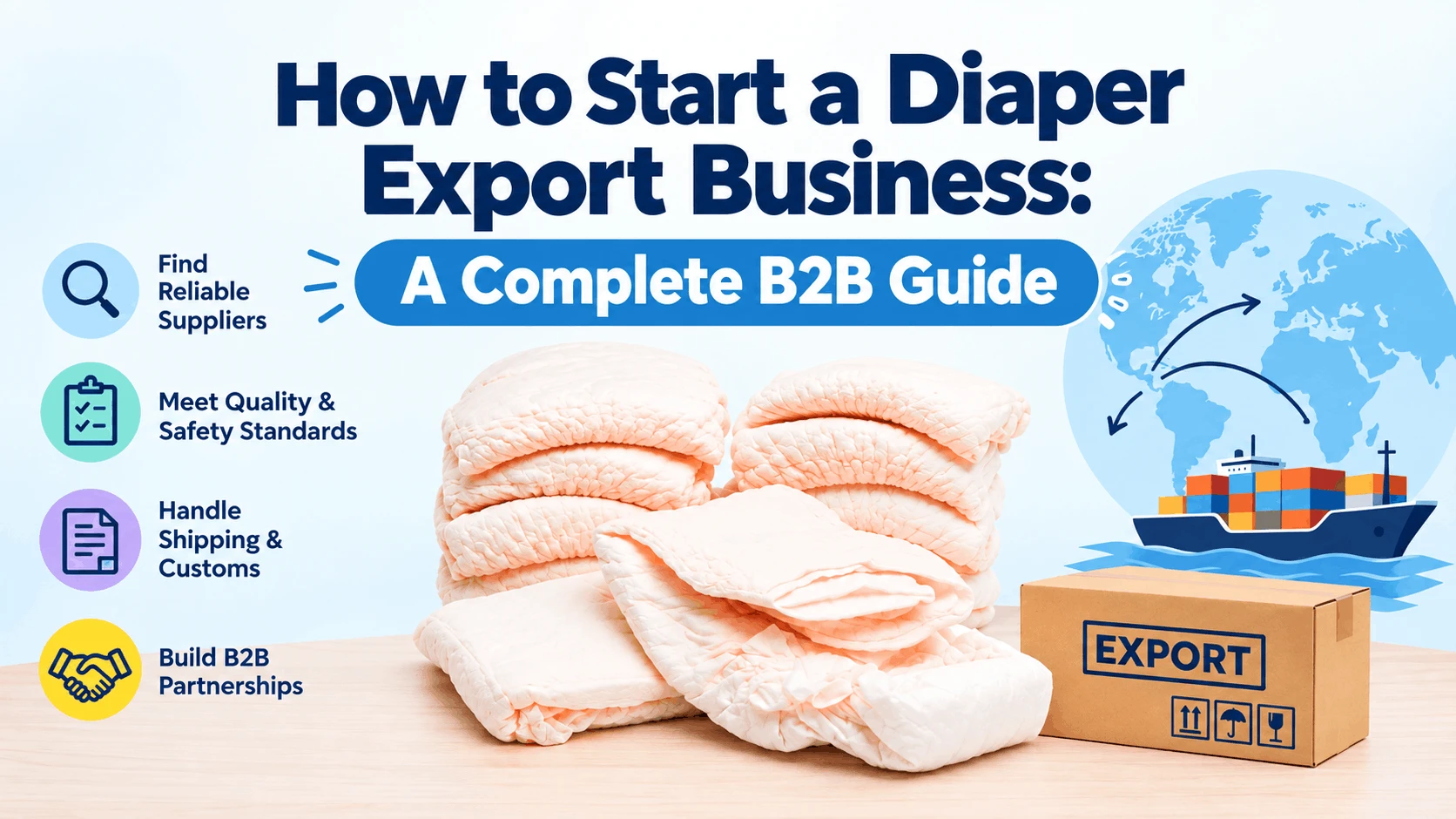
Do you know that, as per NMSC, the diaper industry worldwide is valued at $104.14 billion and will reach an estimated value of around $140 billion by 2030, with a CAGR of 6%? There is demand for baby diaper exports, adult diapers, and training pants in many countries. For manufacturers, traders, distributors, and wholesalers, this is a great business opportunity in the B2B export market. Buyers around the world look for suppliers who can deliver quality products on time at competitive wholesale prices.
If you are wondering how to start a diaper export business, this guide will help you out. In this blog, you will learn how to find suppliers, check product quality, handle export paperwork, calculate your costs, connect with global diaper buyers, manage shipping, and build lasting B2B relationships.
Yes, it can be profitable when you choose the appropriate markets, find potential buyers, and set competitive prices. Diapers are products that are purchased on an ongoing basis. There will be demand for exporters dealing with retail shops, wholesalers, distributors, and even online stores.
The profitability of an export business is not only related to the number of units sold. It is also determined by effective cost management. The list includes the cost of goods, packaging, freight, customs duties, insurance, and other export-related costs. The quality also counts. Business-to-business sales involve buyers looking for suppliers to make repeat orders.
Before launching the business, conduct research on the countries where there is a need for diapers. Find out what competitors are doing, what import regulations exist, and what customers' demands are. Launch with test orders, evaluate potential suppliers, and calculate all the costs prior to taking orders. With proper market research, reputable suppliers, competitive prices, and loyal clients, diaper exporting will become a profitable business.
Here are the simple steps to start a diaper export business:
Before exporting diapers, you need to decide which type of diapers to export and which countries to target. The different types of diapers that you can consider include baby diapers, adult diapers, training diapers, or pull-up diapers. In this type of business, you purchase diapers from suppliers or manufacturers, check their quality, complete the required documentation, and ship them to other countries.
Your target audience can be importers, wholesalers, distributors, retailers, supermarkets, online stores, or healthcare companies. A manufacturer makes the diapers, a diaper exporter ships them to other countries, a diaper distributor supplies them to businesses in a specific area, and a wholesaler buys large quantities and sells them to other businesses. Understanding these roles will help you choose the right way to run your business.
The next step is to look for countries that have demand for diapers. Population size, birth rate, healthcare demand, retail availability, and interest in adult diapers can be considered. At the same time, you need to analyze competition. Comparing the prices, quality, sizing, and packaging of the competitor's diapers is one way of conducting market research.
Furthermore, you will need to consider the rules of importing into those countries. You should find information on the following issues: import duties, product standards, labels, and required certificates. Moreover, you need to find importers, distributors, retailers, and wholesalers that operate in that particular country. Proper market research helps you understand the customer's preferences.
Choosing the diaper supplier is one of the most important parts of a disposable diaper export business. Look for a manufacturer with production capacity, good quality control, and experience handling international orders. Ask about materials used, absorbency levels, available sizes, packaging, and product variations. Also check the Minimum Order Quantity before placing any order.
If you want to sell under your brand, ask if private-label and OEM services are available. Check whether the diaper manufacturer has the certifications and test reports needed for your target market. It's helpful to work with a baby diaper wholesale supplier who already exports to different countries. Always request samples before ordering in bulk. Test the samples for absorbency, softness, fit, packaging, and overall quality. Ordering a sample first can help you avoid mistakes later.
Before exporting diapers, understand the product details. Check absorbency, leakage protection, softness, material quality, and fit. You should also know the sizes and weight ranges for baby diapers, training pants, and adult diapers. These features are important because buyers’ needs can vary by local market.
Packaging and labeling also need attention. Make sure all required information is correct, including product details, size, quantity, brand name, and safety warnings. Confirm shelf life and storage conditions with your supplier. Consistent quality is very important in B2B deals. If the quality changes between shipments, buyers might stop ordering.
Proper documentation is essential in the diaper trade. Common export papers include an invoice, packing list, certificate of origin, and bill of lading. Depending on the product and destination, you might also need product certificates, test reports, or other compliance documents.
Before shipping, review the import rules of the country where your goods are going. Product standards, labeling rules, testing needs, and customs procedures can vary widely. Correct documents help avoid delays, extra charges, and shipment issues. If you're new to exporting diapers, work with a customs agent or freight forwarder who knows your target market.
The export price must cover more than the product cost. Include manufacturing or purchasing costs, packaging, labeling, inland transport, freight, insurance, customs duties, taxes, and other fees. Then add a profit margin for your B2B business. A clear cost breakdown helps you stay profitable.
You should also understand shipping terms. EXW means the buyer handles transportation from the seller's location. FOB includes delivery to the agreed port and loading for export. CIF covers cost, insurance, and freight to the named destination port. DDP includes delivery, import duties, and taxes. Always confirm what each Incoterm means before signing a contract.
When learning about ways of exporting diapers, you should start with distributors, importers, supermarket chains, retail stores, and e-commerce firms. In the case of adult diapers, you might also consider hospitals, nursing homes, care centers, and healthcare distributors. It all depends on your product and target market.
You can find buyers through B2B platforms, trade shows, distributor networks, business directories, and direct outreach. B2B Marketplaces like Tradewheel.com can help exporters connect with diaper buyers and importers from different countries worldwide. Create a supplier profile, show your product range, mention MOQ or packaging options, and respond quickly to inquiries. Clear product information makes it easier to turn leads into B2B deals.
Choose between sea, air, or road transportation depending on order volume, budget, and destination. Sea transportation is normally the most suitable for business-to-business deliveries. Air transportation is normally more appropriate if time is more valued than cost.
Arrange your container space well and use the right packaging to ensure safe transit of the diapers over long distances. The services of a reliable freight forwarder and customs broker can be of great importance in document preparation and clearance.
If you want to grow a diaper export business, providing good customer support is important. Keep your quality consistent and offer prices that match the product quality. Also, communicate directly and clearly with baby diaper buyers. Always give timelines for production and delivery.
If a buyer has any issues, try to respond quickly and professionally. Evaluate the problem and offer them a fair solution when needed. Reliable service can lead to repeat orders, larger shipments, and long-term partnerships with distributors. In B2B trade, a satisfied and happy customer may become a regular buyer.
Avoid these common mistakes when exporting diapers to global buyers:
Starting a diaper export business can be profitable if you conduct your business wisely. As a diaper exporter, considering the choice of market and diaper suppliers, checking quality, understanding the process of exporting, and the documents used in the process is important. You need to calculate all costs beforehand so that you are able to set competitive prices and focus on looking for credible B2B diaper buyers. Start by making smaller quantities of orders so as to minimize risk and learn from the orders made.
Ready to find global diaper buyers? Join Tradewheel.com today and export diapers globally to B2B buyers!
Serving millions of Buyers & Sellers around the world
Join Free
One moment please
 Browse Through Millions of High-Quality Products.